During the 2008 trip to Iwo Jima several of us were lucky enough to meet the only surviving Japanese Iwo Jima war widow who is fit enough to travel to the island, 92 year old Mrs. Teruko Abe. When she heard me speak Japanese she happily shoved a bag into my hands. She explained she had handmade 100 little protection amulets called “Omamori” which would protect us from harm and misfortune. She asked that I give them to the American veterans of the battle with her wishes for a happy life. She made all of them by hand carefully gluing and sewing them together out of seashells and recycled silk kimono material, and a little bell. Each one is unique and different. She said she says a prayer when she finishes each one.
When we think of the casualties suffered by both sides of the battle for Iwo Jima we often overlook the silent casualties; the wives and children of the war dead.
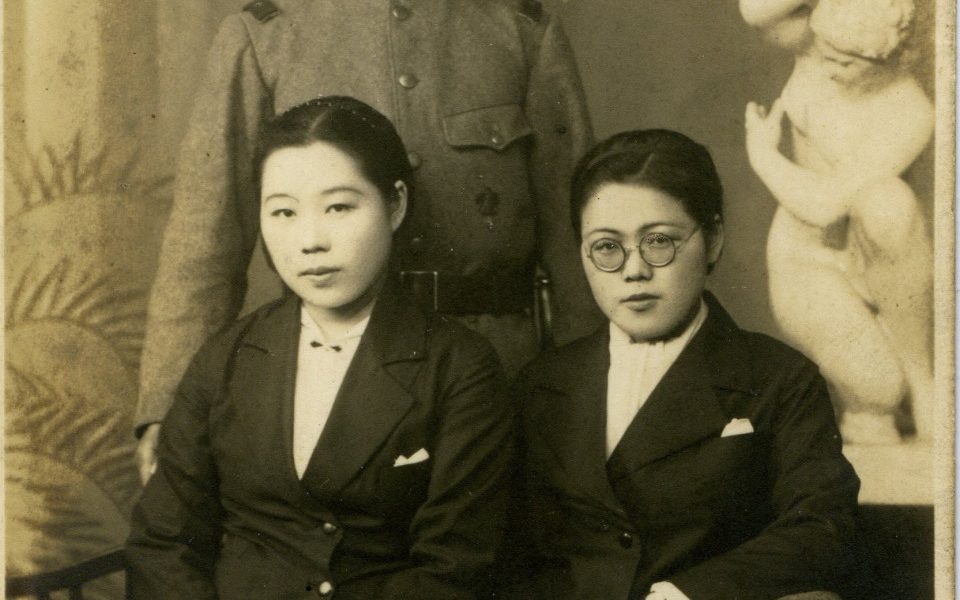
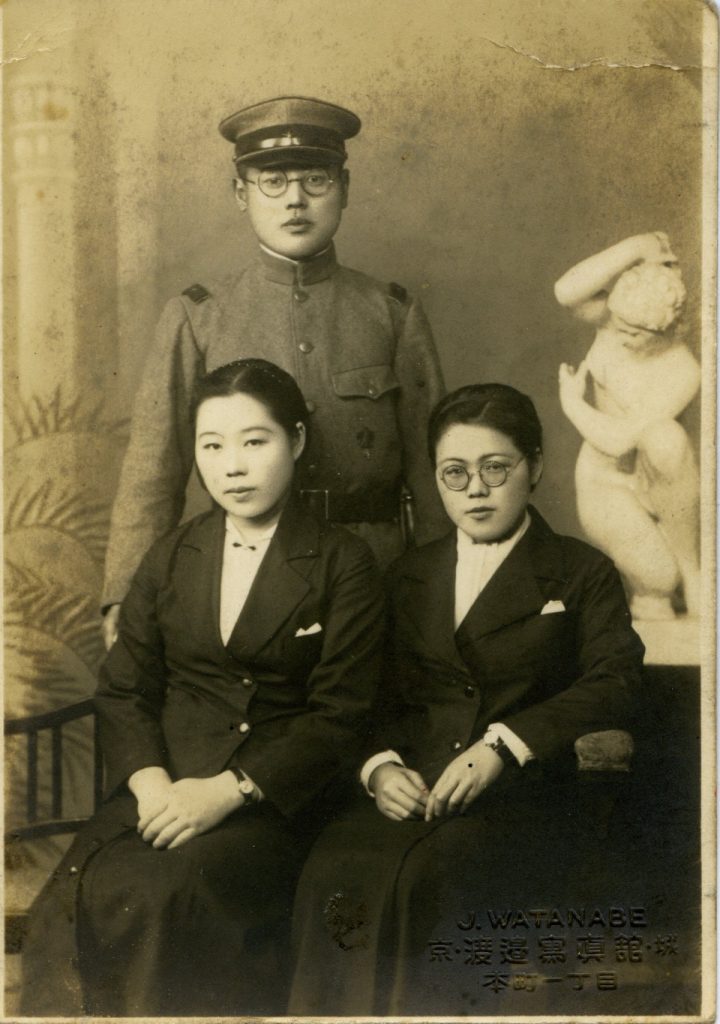
Mrs. Abe’s husband was Army Corporal Tadashi Abe who had served in the China theater of operations before the war and had received an honorable discharge.
She met her husband while she was working as an Army nurse in Tienshin. He had been wounded and he was her patient. After his discharge from the Army they were happily married on April 1, 1941 and lived in Seoul Korea, which was a Japanese colony at the time. He got a job working at a shipping company in the town of Suishoku (near Seoul) and she continued working as an Army nurse saving up to start a family.
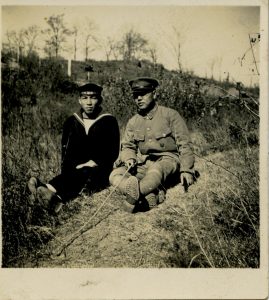
The first time tragedy struck Mrs. Abe was when she learned that her older brother who was in the Navy, Seaman Kiyoshi Kageyama, had been killed during the invasion of Wake Island on Dec. 23, 1941. He was in the Kariya Naval Landing Force Unit that stormed ashore in the predawn attack.
She gave birth to her first daughter Yoshiko in May 1942. They lived happily as a family in Seoul for another 2 years until her husband was recalled into active duty in March 1944. Despite being pregnant with their 2nd child she told him not to worry about her but to do his duty, she would be fine.
He was recalled and attached to the Nishiyama Platoon, 1st Company (HQ), 20th Independent Mortar Battalion, 2nd Mixed Brigade, 109th Division under General Tadamichi Kuribayashi. The 20th Mortar Battalion had 6 of the
heavy Type 98 320mm “spigot” mortars and 12 heavy mortars, which were used with deadly accuracy and skill on Iwo Jima.
On July 1, 1944 half of the Battalion left Pusan bound for Iwo Jima. A couple of weeks the remaining portion of the Mortar Battalion arrived to carry out the work of preparing the defenses as ordered by General Kuribayashi.
Mrs. Abe’s second daughter Michiko was born in October 1944 and her husband confirmed the happy news in a letter he sent from Iwo Jima in December. But that letter was the last she ever heard from him.
After the war she never remarried and struggled to raise 2 girls by herself working as a nurse. She holds no hard feelings for the American veterans she meets on Iwo Jima, even though she knows one of them could be the one who killed her husband. She says, “It is ‘War’ that is bad, not the young boys who are caught up in it. You Americans were doing your duty, just as my husband was doing his duty.”
We met her again on the 2009 trip and the 2010 trips to Iwo Jima and she informed me that, Lord willing, she will be seeing us again in March 2011. I visited her in her hometown in Ibaraki, Japan in Nov 2009 to hear more of he experiences as a decorated Army nurse. I will share more of her experiences in my upcoming 3 book series on the firsthand accounts of Japanese Army and Navy veterans of WWII.
–Dan King